BLOG Water conditions & local knowledge
High Water in Patagonia: What to Expect This Season
What a snowy winter means for river levels, fishing techniques and flexible trip planning around Bariloche at the start of the 2026/27 season.
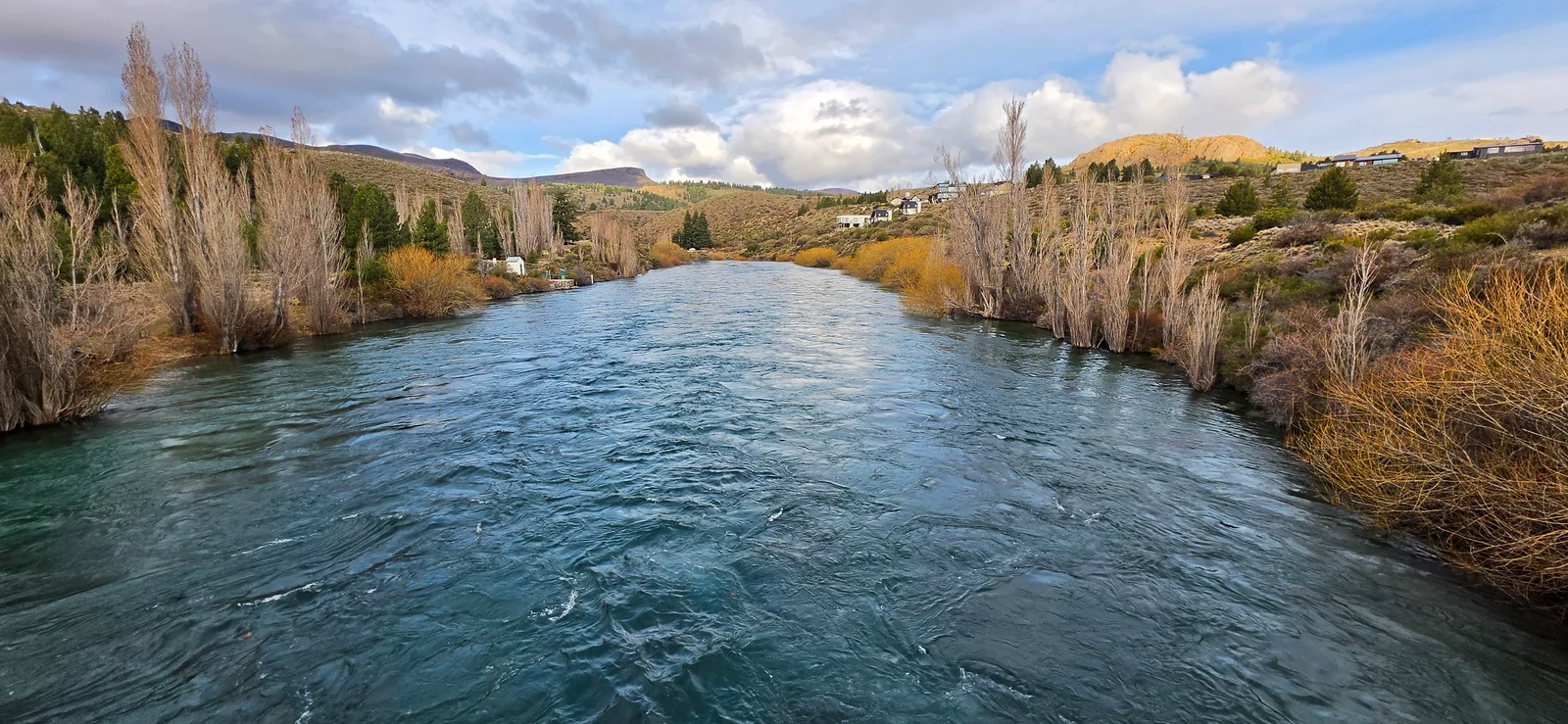
A snowy winter changes the way we approach a fishing season. Around Bariloche, abundant snowfall, frequent rain and snow still covering the mountains are setting the scene for a high-water start to the 2026/27 season. For anyone planning fly fishing in Patagonia, the useful question is how those conditions will shape each day on the water.
Our early-October observations point toward powerful currents, flooded margins and more limited access during the first weeks. There will still be different options among the rivers and lakes we fish from Bariloche, but choosing the right destination will matter more than following a fixed itinerary.
01 / The starting point
What high water means for early-season fishing
Snowmelt is expected to keep rivers running high as the season begins. Water can cover banks that normally provide an easy place to stand, change the shape of familiar runs and make a usual access point unusable. A river that looks recognizable from a bridge may require a very different fishing plan.
Water level is only part of that decision. We also consider clarity, current speed, the direction conditions are changing and whether the planned access remains suitable. The seasonal pattern described in our guide to the best time to fish Patagonia is a useful starting point; this year's conditions determine how we apply it.
02 / Access comes first
Limited wading and the role of boat fishing
Wading will be more difficult and limited in high water. In some sectors, we will rule it out. A shallow-looking margin is not enough to establish whether an approach is appropriate; the current and the route in and out matter too. Anglers interested primarily in wade fishing near Bariloche should tell us before we plan their trip.
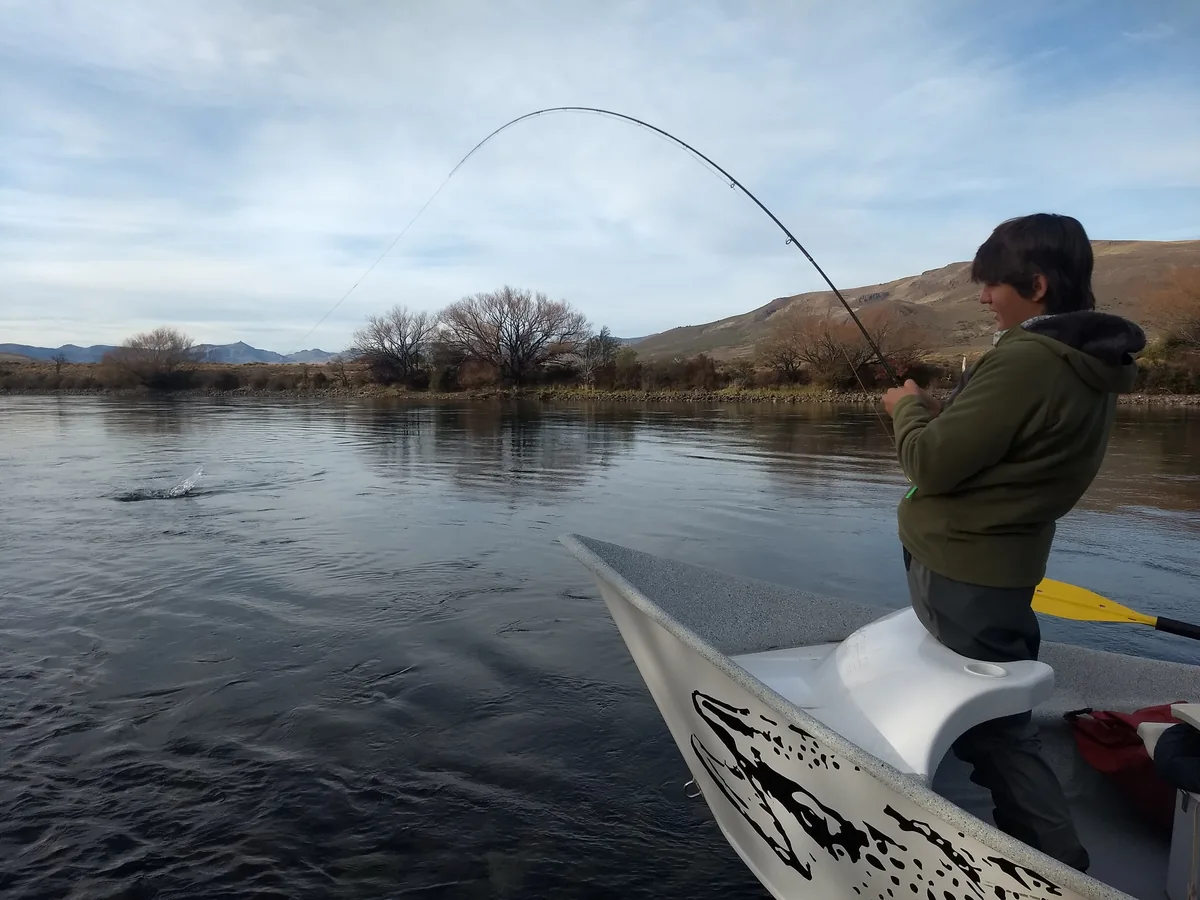
Fishing from a boat gives us more options for reaching productive water when a suitable route is available. Our approach to drift-boat fishing on the Limay River is based on selecting a workable stretch and adapting the day to its conditions. A boat does not make every high-water section navigable: safe access, launch and take-out points remain essential to the decision.
03 / A different presentation
Streamers, sinking lines and slower water
Weighted streamers and sinking lines will be important tools at the start of the season. They help us present a fly below the surface, with the setup adjusted to the depth and current of the particular place we are fishing. The aim is a controlled presentation in promising water, rather than simply using the heaviest equipment available.
We will look closely at softer seams, back eddies, side channels and flooded margins where trout may find shelter and feeding opportunities. These are the kinds of features discussed in our note on reading water for trout. Their usefulness still depends on whether they can be reached and fished appropriately that day.
High water does not automatically mean poor fishing, and it does not guarantee easy fishing either. It changes the places we can cover and the way we present the fly. Our guide to dry flies, nymphs and streamers in Patagonia explains how these approaches fit different situations.
04 / Choose the water each day
Why flexibility matters around Bariloche
The Limay River and the Manso River are distinct environments. We will assess each on its own conditions, without assuming that a favorable report from one tells us what is happening on the other. A destination chosen weeks ahead remains a preference to discuss, not a promise that the river will be suitable.
Lakes are also part of that conversation. Our comparison of lake and river fly fishing explains the different experiences they offer. An environment such as Roca Lake may give us another option, provided its access, wind and water conditions are suitable. A lake is not an automatic fallback in every forecast.
For guided fishing day trips from Bariloche, we review levels, clarity, weather and access before selecting the destination and approach. Staying flexible allows that decision to reflect the water we actually find.
05 / Looking beyond opening week
Snow in the mountains is water stored for later
There is an encouraging side to a winter with substantial snow. Snowpack stores precipitation and releases water as it melts, contributing to streams and rivers. The US Geological Survey's explanation of snowmelt and the water cycle describes this process and why its timing varies between seasons.
That is why the snow still visible in the mountains matters beyond the first fishing days. It represents a reserve for the months ahead, although it cannot tell us exactly what any individual river will look like later in summer. From our perspective on the water, renewed flows and the return of water to dry margins are reasons to welcome this winter while adapting carefully to the immediate conditions.
06 / Plan with room to adapt
How to prepare your early-season fishing trip
Send us your approximate dates, the number of anglers, your experience and the style of fishing you most enjoy. If wading or a particular river is especially important to you, mention it early. That helps us discuss suitable expectations before making a plan.
Review our suggestions on what to bring for fly fishing in Bariloche, then check equipment requirements with us for your dates. If you have room for several fishing days, our note on how many days to spend fishing in Patagonia can help you think through the balance between time on the water and itinerary flexibility.
Questions about fishing high water in Patagonia
Does high water mean we cannot go fishing?
Not necessarily. It means we need to assess each environment and access route. Some sections may be unsuitable while another destination offers a workable option. If conditions do not support a suitable trip, the plan needs to change.
Will we fish only with streamers?
We expect streamers and sinking lines to play a major role early in the season. The final choice depends on the water and opportunities we find, so we keep the approach flexible.
Can you confirm the river when I book?
We can discuss your preferred destination when planning the trip. We make the final choice close to the fishing date, based on the conditions and access available.