NOTES Fishing techniques
Patagonia Fly Fishing Flies: A Bariloche Guide to Choosing Patterns
Three familiar fly types, three different ways to present food to trout. The water helps decide where to start.
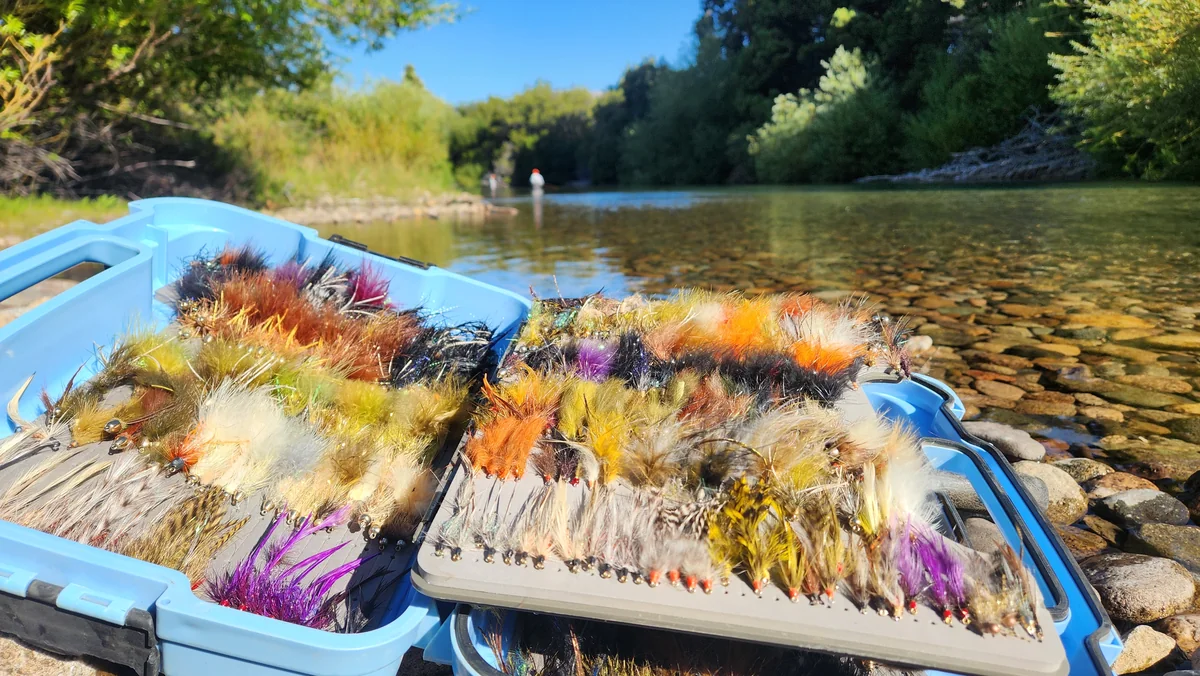
Choosing a fly for fly fishing in Patagonia starts with where and how the trout are feeding. Across the rivers and lakes near Bariloche, dry flies, nymphs and streamers offer different ways to reach fish. None is the right answer for every part of every day.
On the surface or below it
Dry flies float on the surface and often imitate insects resting, drifting or landing there. A visible rise gives you something to investigate. On Hess Lake, for example, summer insect activity can create opportunities to watch a trout take a fly at the surface.
Nymphs generally represent immature aquatic insects and are fished below the surface. In a river such as the Pichi Leufú, the depth and the way the fly drifts can matter as much as the pattern. Your guide helps you connect the presentation to the current in front of you.
Streamers imitate swimming prey, including small fish. They can be worked at different depths and speeds, from a Limay River float to a session along the structure of Roca Lake. Using a streamer does not automatically mean fishing deep or making long casts.
Let the conditions guide the choice
If you are new to fly fishing, you do not need to memorize a box of pattern names before arriving. Ask what the selected fly is intended to imitate and where it should travel. Learning to read the water makes the answer easier to understand.
Learning fly selection with a Bariloche fishing guide
Start with an observation you can describe. Are fish taking something on top, following a moving fly or showing no visible activity? Tell the guide what you noticed, including where it happened and how the fly was moving. This creates a useful conversation about the next presentation. A pattern's name alone does not explain the depth, speed or path that will make it relevant.
Ask to change one part of the approach at a time when practical. If you switch fly, distance and retrieve together, it becomes harder to understand what made the difference. A guided fly fishing day trip from Bariloche provides time to discuss that process. Learning why a guide makes an adjustment is knowledge you can use later, even if your next fishing trip takes place somewhere else.
Matching flies to river and lake presentations
On moving water, a fly may pass a possible holding position only briefly. The angle of the cast and the line on the surface affect that journey. A nymph needs a useful route below the surface just as a dry fly needs one above it. On a guided Manso River float, boat movement adds another factor that the guide considers while helping you prepare the next cast.
Lake fishing brings a different question: how will the fly travel through a chosen area of cover or depth? It may be left to drift or moved with a retrieve appropriate to the pattern and conditions. Comparing lake and river fly fishing helps explain why the same box of flies can be used differently. The water determines the task; the fly is one part of completing it.
Planning tackle for Patagonia fishing trips
Before buying patterns for a guided trip, tell us what you already own and which destinations interest you. A photograph of your fly boxes can make the conversation more concrete. Ask whether your rod and line suit the proposed fishing, and confirm what equipment will be supplied. This avoids packing around an assumed technique before the itinerary and the conditions have been discussed.
For overnight fishing trips with camp support, the same preparation should reflect several days of fishing rather than one fixed presentation. Keep useful tackle organized so changes are easy during the day. If wind makes a setup uncomfortable to cast, tell the guide and review the adjustments for Patagonian conditions. A manageable presentation is more useful than carrying a particular fly simply because it appears on a list.
Before packing your own tackle, review the equipment and clothing for your trip. Our guides in Bariloche can discuss suitable flies for the planned water and explain adjustments during the day. A useful question is not simply which fly to tie on, but what to change about its depth, drift or movement.