NOTES Learning on the water
Reading Trout Water: Guided Fly Fishing in Bariloche, Patagonia
Current, shelter and depth give you clues before the first cast, on both rivers and lakes.
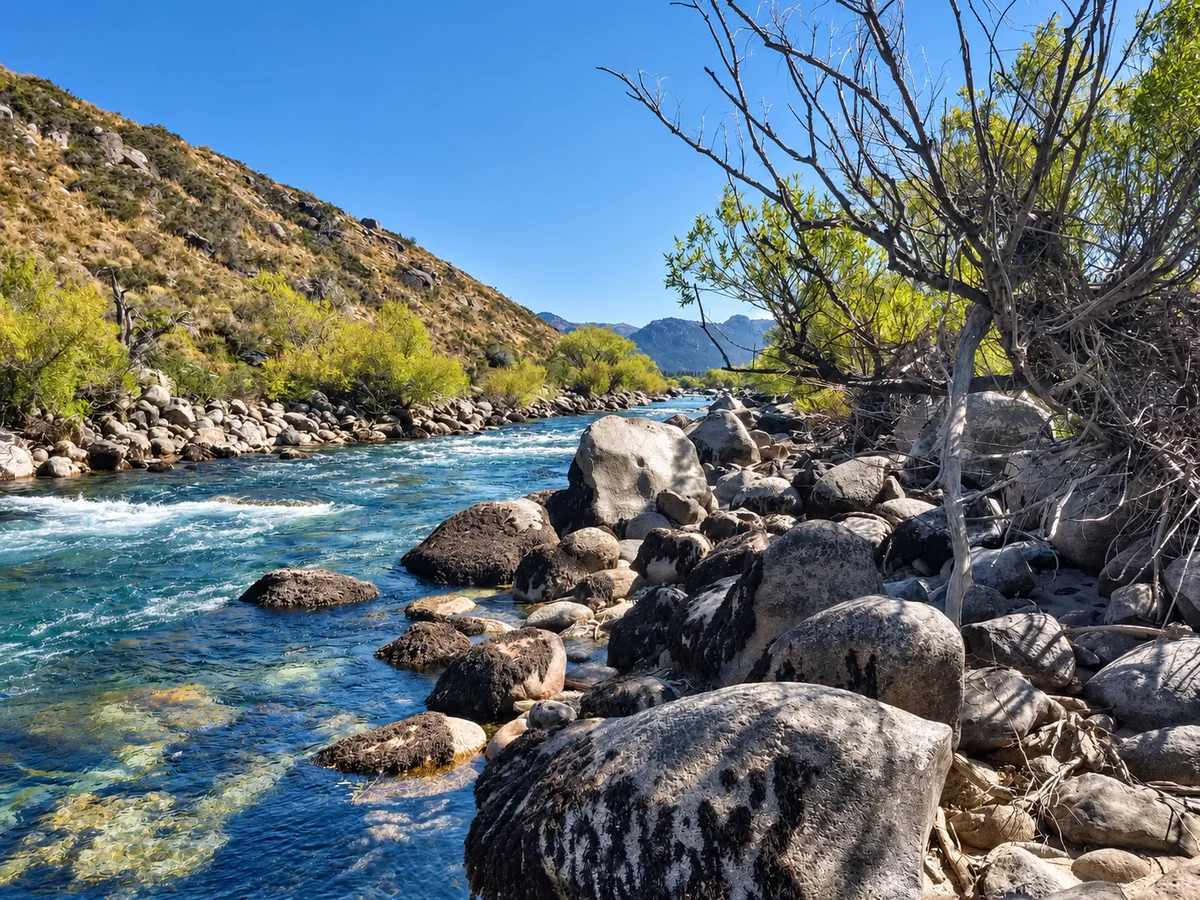
One of the most useful things to learn on a guided fly fishing trip in Bariloche is how to choose a place to cast. Reading water means looking for conditions that may suit a trout: access to food, shelter and a position where it can hold without fighting the strongest current.
Start with a small piece of river
Look for the boundary between faster and slower water, the pocket beside a rock or the shade of an overhanging bank. These are clues rather than guarantees. On the Pichi Leufú River, working through a small section can make those differences easier to discuss.
Decide where the fly should land and where it should drift before lifting the rod. A long cast across several currents can pull the fly away from its intended path. From a boat on the Limay or the Manso, your guide also considers how the boat's movement will change that angle.
Watch before stepping into shallow water or moving closer to the bank. The water nearest you can be worth examining, and approaching slowly gives you time to notice movement or a rise.
Use the same questions on a lake
On Hess Lake or Roca Lake, a reed edge, submerged timber or a change in depth can provide a starting point. Instead of looking only for river current, watch for cruising fish and repeated signs of feeding.
For beginner fly fishers, it helps to focus on one target at a time. Your choice of dry fly, nymph or streamer and the effect of wind on the presentation then become part of the same decision.
Use your first casts to learn about the water
Before covering a whole run, choose a short route for the fly. Watch whether it follows that route or is pulled away by the line. Your guide can explain how the cast, current and line position interact. This gives you something specific to improve on the next attempt, instead of deciding that a quiet stretch must contain no fish.
Pay attention to what changes as the fly travels. A seam that looks straight from a distance may curve around a rock or accelerate near the bank. Describing these details to your fly fishing guide in Bariloche makes instruction more useful. You do not need technical vocabulary: pointing out where the fly changed speed is enough to begin a practical discussion.
Reading water while wading or fishing from a boat
On foot, you can usually spend more time observing a small section before choosing your position. That does not mean entering every piece of water that looks interesting. Follow the guide's assessment of access and footing, and discuss whether a useful cast can be made from the bank. Our Pichi Leufú wade fishing trips offer a setting for learning to approach one manageable section at a time.
From a moving boat, the angle changes as you pass a feature. Listen to the guide's description before the boat reaches it so you have time to prepare. The objective may be a bank, a current boundary or the water behind an obstacle. Reading about drift boat fishing on the Limay helps explain how rowing and presentation work together during a guided float.
Build observation into a full-day fishing trip
During a longer day, pause to compare what you saw in the morning with the next stretch of water. Did the useful positions share shade, slower current or nearby depth? Look for connections without assuming that one successful situation explains the whole river. A full-day Limay fly fishing trip gives you more time to discuss those observations and practice a chosen approach.
The same habit can continue on a multi-day visit. Keep a short note about the water and the presentation rather than recording only catches. When planning several fishing days around Bariloche, explain that learning is a priority. Southern Rivers Patagonia can discuss a suitable mix of environments and instruction. Progress may mean recognizing a promising feature or managing a drift more clearly, even before a fish responds.
On our private day trips, ask your guide to explain why a particular spot deserves a cast. Understanding that choice is something you can take home and apply to other waters.