NOTES River techniques
Mending Fly Line: A Guide to Patagonia Trout River Drifts
Watch what the current does to the line after your fly lands.
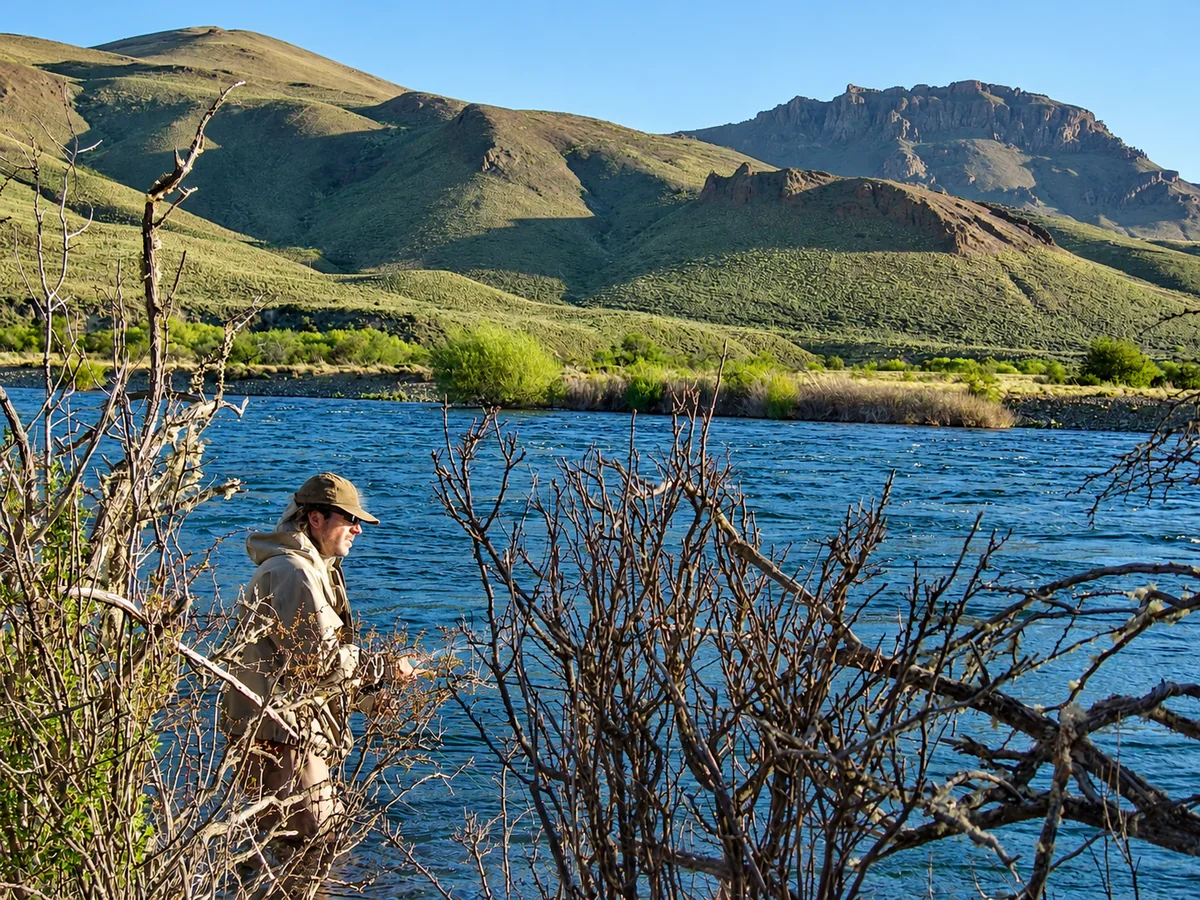
You make a cast towards promising trout water, the fly lands where you wanted, and then the line begins to pull it across the current. That is a useful moment to learn about mending. On a guided river fishing day from Bariloche, your guide can show how repositioning part of the fly line changes the presentation. The movement has a purpose: managing the relationship between the current, the line and the way you want the fly to travel.
Recognise the current before correcting the line
Look at the water between you and the fly. It may move faster or slower than the lane you are trying to fish. As these currents carry different parts of the line, a curve can form and begin pulling on the leader. That pull matters when your aim is a natural drift, particularly with a dry fly or a nymph presentation.
Ask your guide to identify the current that is creating the problem. A mend is not automatically an upstream movement and should not become a gesture repeated after every cast without looking. The direction and amount depend on what the water is doing. Our guide to reading trout water gives context for noticing the lanes before you try to control a line crossing them.
Reposition only the line that needs attention
Mending means moving part of the fly line on the water, usually with a controlled lift and repositioning of the rod. The aim is to manage the line without unnecessarily moving the fly out of the intended lane. A forceful correction that drags the whole setup sideways can undo a promising presentation even if the original cast was accurate.
Start with a situation your guide can explain clearly. Watch a short demonstration and compare the fly's movement before and after the correction. It is easier to understand the purpose when you can see a change, rather than trying to memorise a large movement from a photograph. Small practical observations are more useful than making the rod gesture look impressive.
Use the casting angle to simplify the drift
Mending cannot rescue every cast equally well. A presentation that crosses several conflicting currents can be difficult to manage from the beginning. Moving to a suitable position, changing the angle or shortening the cast may leave less line in troublesome water. In a boat, your guide also uses positioning to help create a workable presentation.
Link this idea with casting accuracy: the objective is not just to reach a point but to leave the fly in a position where it can fish. Before the next cast, ask where the line will lie and what correction may be needed. Thinking ahead often reduces the amount of hurried movement required once the drift has already started.
Adapt line control to the fishing method
A dry fly drifting with the current and a streamer being actively retrieved have different objectives. Do not apply the same rule to every method. Even with nymphs, you need to understand what the guide is trying to achieve with depth, contact and the indicator or other visible reference. The movement should serve that presentation rather than a habit formed on another river.
Our note about nymph fishing and depth explores how line control is connected with the fly's path below the surface. Watch the visible clues and ask what they suggest, while accepting that you cannot see every detail of the underwater drift. A guide helps interpret those clues and chooses an adjustment that you can compare on the next presentation.
Practise one decision at a time on a guided trip
Choose a short section and work on recognising when the line begins to affect the fly. Then try a suitable correction with the guide's help. If you change distance, angle, fly and mend together, it becomes difficult to tell which adjustment improved the presentation. Repeating a simple situation can make the lesson much clearer.
Tell Southern Rivers Patagonia if you would like to focus on presentation during a full-day Limay River trip or another suitable destination. The goal is to recognise when a mend helps, when the casting angle needs changing and when the fly is already travelling well. Knowing when to leave a good drift alone is also part of effective line control.