NOTES Learning on the water
Fly Casting Accuracy: Guided Fishing Lessons in Bariloche
A repeatable cast to useful water can be more valuable than a single long cast.
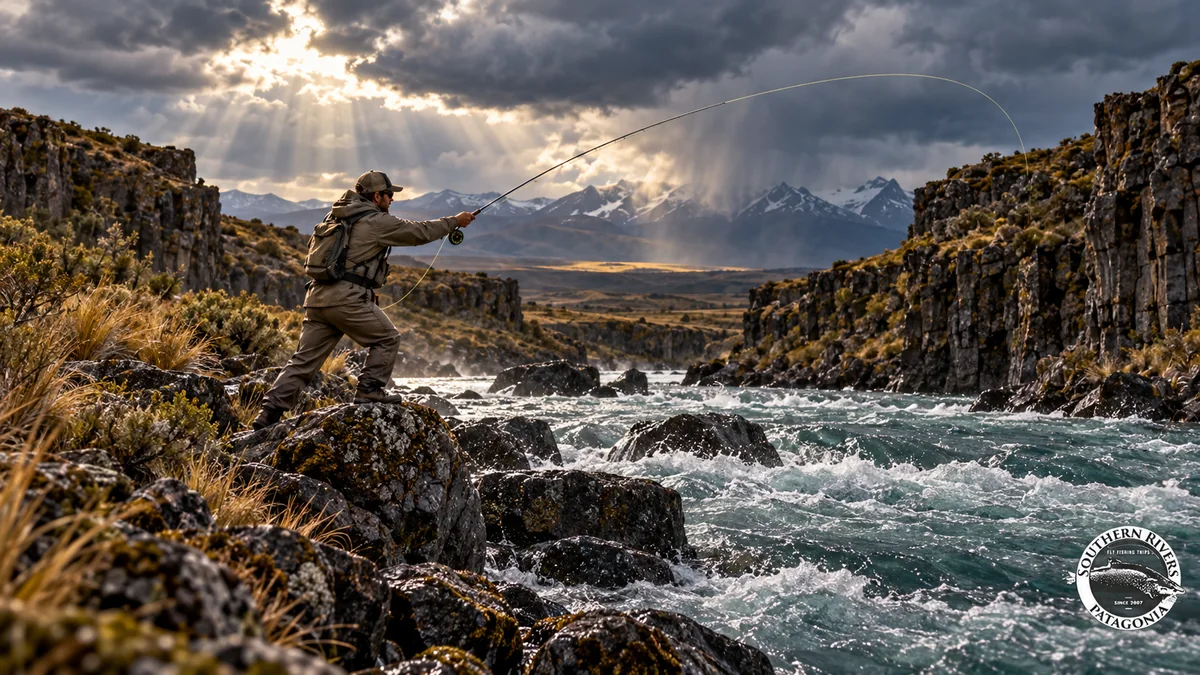
A successful cast is one that puts the fly where you can fish it effectively. Distance sometimes matters, but it is only one part of that task. During guided fly fishing in Bariloche, accuracy, timing and line management often give an angler more useful progress than trying to reach the farthest possible bank. You can prepare for that experience by thinking about a target, a manageable amount of line and what should happen after the fly lands.
Choose a target you can identify clearly
Instead of casting towards a whole bank, choose a small area: the edge of a current seam, the open side of a rock or a lane your guide has pointed out. A specific target makes it easier to judge the result. You can then adjust the direction or the amount of line without changing several parts of the cast at once.
Ask your guide to explain why that target is useful. The aim is not simply to touch a point on the water. Your fly may need to arrive upstream of the fish or enter a lane with enough space for a natural drift. Our note about reading trout water connects those decisions with the current and the places where a presentation can actually work.
Begin with a manageable amount of line
Work at a distance where you can repeat the movement comfortably. If every cast finishes with extra line collapsing around the fly, adding more distance is unlikely to solve the problem. Your guide can help separate issues of timing, direction and slack. Concentrating on one adjustment makes the response easier to understand than trying to change your entire casting style at once.
When practising away from the water, use a hookless practice setup in a suitable open area and keep clear of people and obstacles. Set simple targets rather than measuring only the longest cast. You can practise changing direction and judging how much line is needed, then discuss the results with your guide before applying the movement to a real fishing situation.
Reduce unnecessary movement between presentations
Repeated false casting can take attention away from the target and use time while a boat is moving past good water. It can also add opportunities for a tangle. The goal is not a rigid limit on movements, but a controlled way to prepare and deliver the fly when the guide identifies a useful opening.
Before picking up the line, know where the next cast is going. Organise the loose line and check the space around you. If you share a boat, follow the guide's instructions about casting direction and timing. The note about two anglers with different experience levels explains why coordinated space helps both people, regardless of how confidently either one can cast.
Plan the drift as part of the cast
Once the fly lands, the work continues. A cast that reaches the target can still leave too much line across a faster current. Your guide may change the casting angle or ask you to reposition part of the line. Understanding the intended drift helps you judge the entire presentation instead of celebrating the landing and then losing track of the fly.
Learn the relationship between a cast and mending the fly line. Sometimes a shorter cast leaves you with much better control. At other times, changing where you stand or how the boat is positioned creates a more useful angle. Those decisions connect technique with the river, rather than treating casting practice as a performance separate from fishing.
Adapt the lesson to Patagonia conditions
Wind, bank vegetation and the type of fly affect how a cast feels. Tell the guide if an instruction is unclear or if the movement feels difficult with the current setup. The answer may involve a simpler presentation, another angle or different equipment. It does not have to mean forcing a longer cast into a situation that is already hard to control.
If improving technique is a priority, mention it when arranging your private fishing day. Southern Rivers Patagonia can build instruction into the guided experience. A useful result is the ability to recognise a target, deliver a controlled cast and understand its drift more consistently. Those skills travel home with you, even when the next river looks very different.