NOTES River techniques
Nymph Fishing for Trout near Bariloche: Depth and Drift
Learn to think below the surface without losing track of the clues above it.
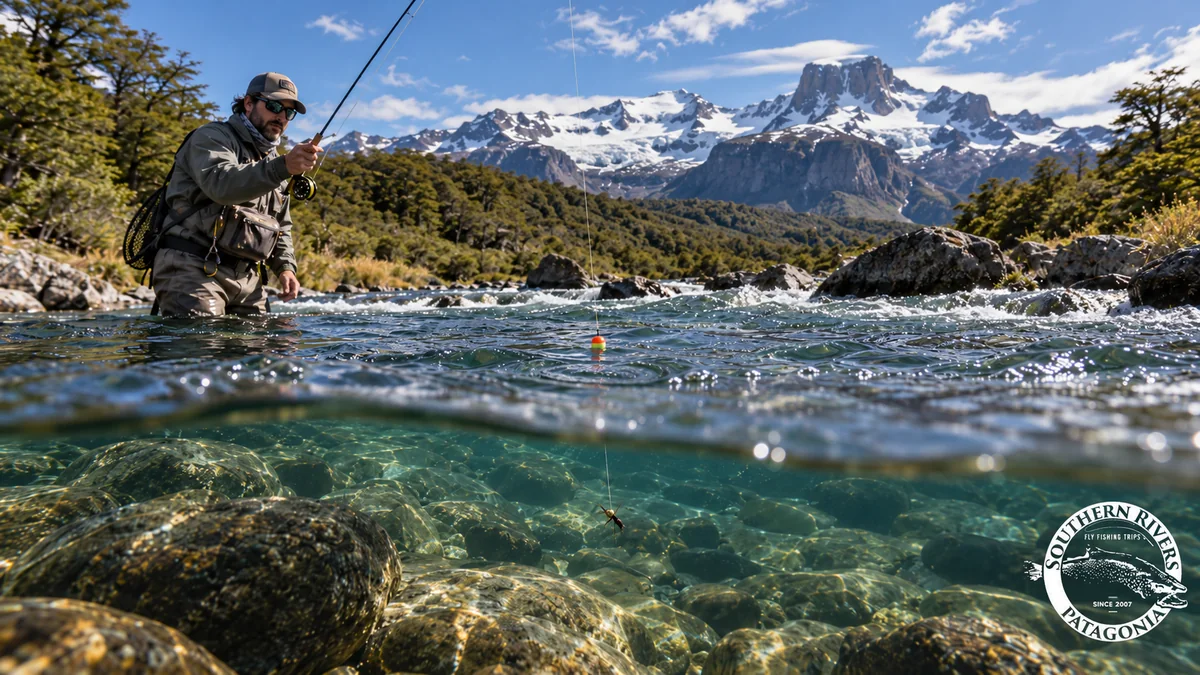
A quiet surface does not necessarily mean there is no reason to fish. Nymph fishing explores the water below it, where the fly's depth and drift become central to the presentation. On a guided trout fishing trip near Bariloche, your guide can explain the setup and show the visible clues that help interpret an underwater drift. The useful starting point is a clear idea of the water being covered, rather than adding weight without knowing what the change is meant to achieve.
Give the fly time to reach the intended water
A nymph does not immediately arrive at a chosen depth when it lands. Current, the fly and the arrangement of the line affect how it travels through the water. The guide may ask you to cast farther upstream of the area being fished so the presentation has time to develop. That landing point serves a purpose beyond simply getting the fly into the river.
Ask which part of the drift is expected to be most useful. This connects the cast with the depth and position you are trying to reach. Our reading-water guide helps explain why one lane can deserve more attention than another. A complete presentation includes getting into that lane, travelling through it and deciding when to prepare the next cast.
Understand the indicator or visible reference
Your guide may use an indicator or another visible part of the setup to help follow the drift. Watch how that reference moves compared with the surrounding surface. A hesitation, change of direction or unexpected movement deserves attention, but not every interruption is a fish. The lesson is to notice changes and understand how the guide wants you to respond.
Have that conversation before beginning. It is much easier to follow an instruction when you know what you are watching and what action is expected. Tell the guide if the reference is difficult to see. A manageable presentation you can follow is a better learning tool than a long drift that becomes invisible almost as soon as it starts.
Change depth and position deliberately
If the setup repeatedly catches the bottom, or appears to pass above the intended area, discuss a controlled adjustment. Depth is influenced by several connected choices, including position, drift length and the equipment used. Simply adding more weight is not a universal answer and can make casting or line control more difficult.
Try changing one factor at a time when the situation allows. After the guide explains an adjustment, repeat a similar cast so you can compare the result. You are building an understanding of cause and effect. The leader and tippet guide covers another part of that relationship: the connection to the fly needs to suit the method, not just remain unchanged because it worked earlier with a dry fly.
Manage the line above the underwater presentation
Even when you cannot see the nymph, the line on the surface can pull it out of a useful path. Look at where faster or slower current is forming a curve in the line. Your guide may suggest a different casting angle, less line on the water or a suitable mend to improve the drift.
The note about mending fly line explains why the correction depends on the current rather than a fixed upstream gesture. Avoid changing the setup merely because a cast felt unsuccessful. First consider whether the drift was controlled enough to make a useful comparison. Equipment, position and line management need to be understood together.
Use guided practice to make the method clearer
A beginner can learn by concentrating on a short drift and a visible reference, with the guide handling the more complicated decisions at first. An experienced angler may want to compare different depths or approaches. Neither person needs to treat nymph fishing as a competition to use the most elaborate arrangement possible.
If you would like to develop this technique, mention it when organising your private Bariloche fishing trip. Southern Rivers Patagonia can discuss suitable water and how instruction fits the day. Keep an open mind if surface activity or conditions suggest a different method. Understanding why you change technique is as valuable as learning how to fish a nymph well.