NOTES Conditions on the water
Fly Fishing in Patagonia Wind: Tips for Guided Bariloche Trips
Wind changes casting and boat positioning. A flexible plan and a controlled presentation help you enjoy the day.
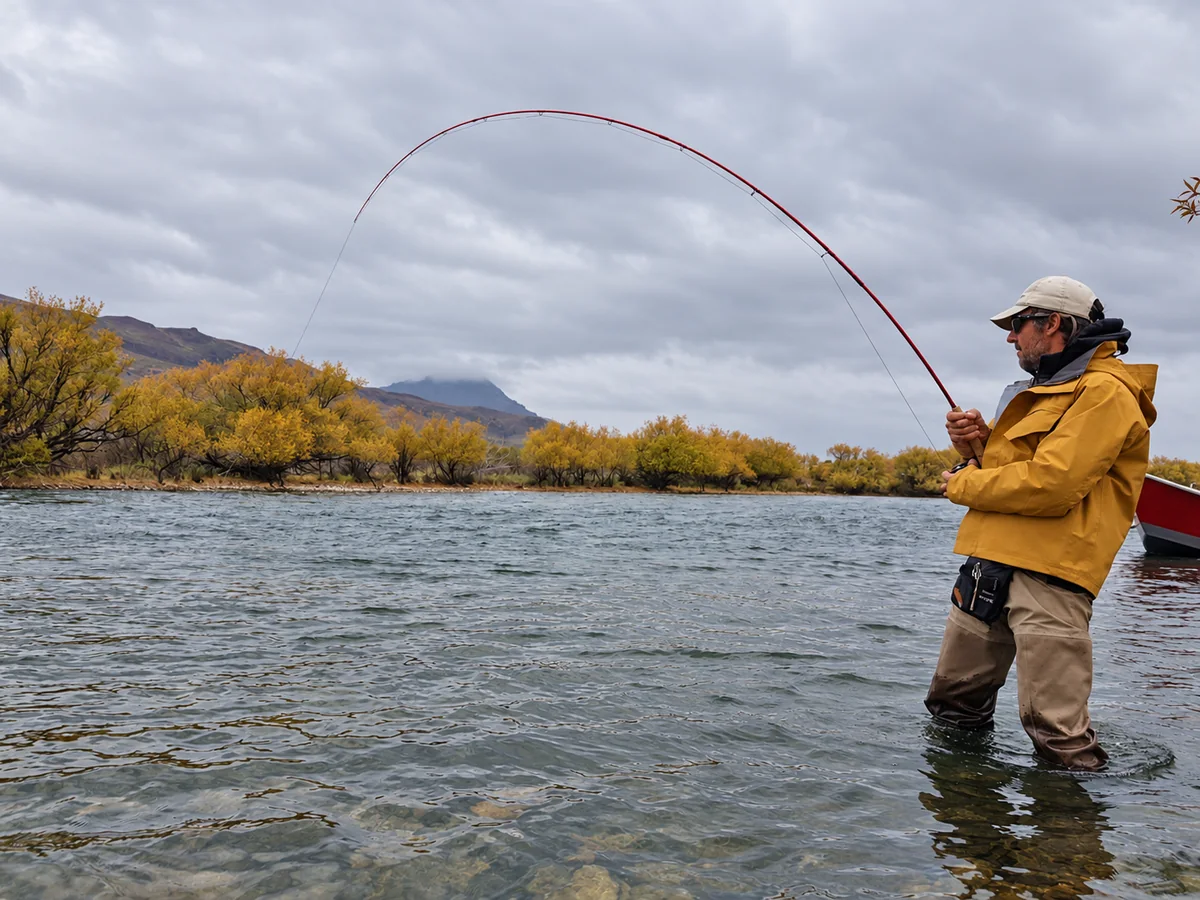
Wind is one of the conditions to consider when planning fly fishing in Patagonia. It affects how a line travels, how a boat is positioned and which parts of the rivers and lakes around Bariloche are suitable that day. A forecast is useful, but the decision also depends on what happens at the water.
Keep the cast manageable
Trying to force extra distance can make a windy session frustrating. A shorter, controlled cast is often a better place to start. Your guide can adjust the fishing position and demonstrate a casting angle that keeps the fly away from you and the other people in the boat.
Pause when a gust disrupts the cast and follow the guide's instructions before trying again. Sunglasses and a secure hat belong on your packing list, along with layers that remain comfortable while you are sitting in the boat.
Tell your fishing guide if wind makes you uneasy or tires your casting arm. The point is to find a presentation you can manage, not to keep repeating an uncomfortable cast.
Leave room to adapt the day
For our guided day trips, wind direction and strength help shape the route and the choice of water. The half-day Limay trip offers a shorter format, but a shorter trip is not a guarantee of calm conditions. Compare half-day and full-day options around the time you actually have.
A forest lake is not automatically sheltered, and a river is not automatically exposed. Our comparison of lake and river fishing helps explain the different settings. If conditions are unsuitable, we discuss the available alternatives.
Working with your fly fishing guide when the wind changes
Describe the difficulty before trying to solve it with more force. You might be losing sight of the fly, struggling to keep a loop under control or finding that loose line blows around the boat. Those are different problems. Your guide can watch a complete cast and suggest one adjustment, then give you time to feel the difference before adding another instruction.
Agree on a clear target and a manageable distance. Accurate fishing close to the boat can be more useful than reaching a distant bank with little control. For a beginner's first fly fishing trip, this also keeps the lesson focused. Experienced anglers benefit from the same process when a familiar technique becomes awkward in a new wind direction or fishing position.
Wind, boat position and the choice of fishing water
The direction of the cast is only part of the decision. Your guide also considers the position of the boat, nearby obstacles and how the line will travel after landing. Listen before beginning a new presentation, especially when another person is preparing to cast. Do not assume that the comfortable angle from the previous fishing spot will be the right one at the next.
Conditions may influence the choice between lake and river fly fishing near Bariloche, but neither setting is automatically sheltered. A forest shoreline and an open river reach present different situations that need assessing on the day. Southern Rivers Patagonia plans around the available conditions; a preferred destination or technique remains a preference to discuss, rather than a promise that ignores the weather.
Keeping a Patagonia fishing itinerary flexible
Tell your outfitter which parts of the schedule are fixed, such as an onward transfer, and which can move. That information helps when comparing half-day and full-day fishing trips. A longer day provides a different schedule, but it does not guarantee a wind-free period. Confirm the arrangements for your particular trip and ask how changes will be communicated.
Pack so that adjustments on the water are straightforward. Secure small personal items, keep a suitable layer accessible and check the clothing list for a guided fishing day before departure. On overnight camp trips in Patagonia, discuss protection for luggage as well as what you carry in the boat. Being organized leaves more attention available for the fishing and the guide's instructions.
When deciding how many days to fish or arranging an all-inclusive stay, leave some flexibility in your preferences. That gives the planning conversation more options without promising that every day will suit every destination.