NOTES Understanding your tackle
Fly Fishing Leaders and Tippet: Patagonia Trout Guide
The final part of the line changes how a fly turns over, drifts and responds.
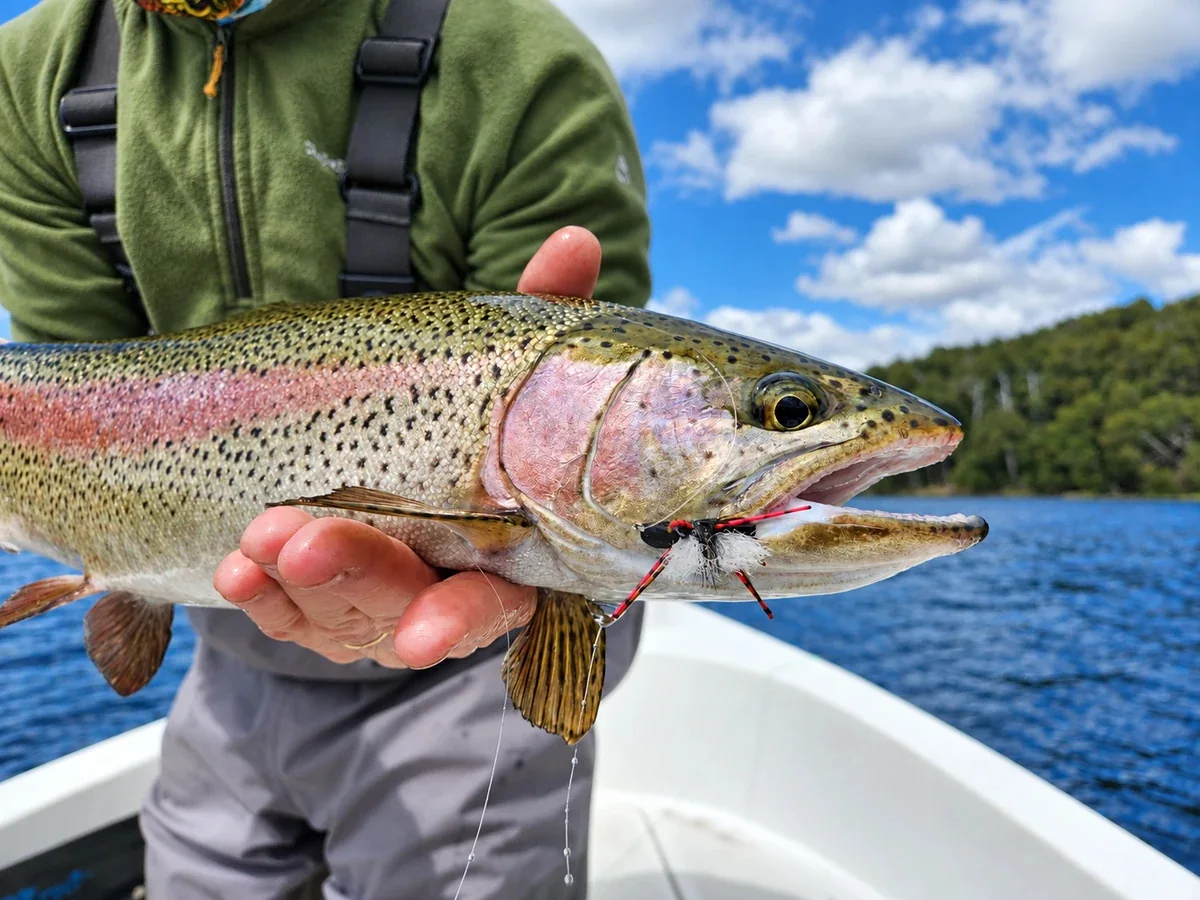
The fly rod is easy to notice, but the leader and tippet often explain why a presentation behaves differently from one cast to the next. These are the connections between the fly line and the fly, and they deserve attention during guided trout fishing in Bariloche. You do not need to memorise a collection of formulas before your trip. Understanding what each part does makes a guide's adjustments easier to follow and gives you a useful question to ask when something changes.
Separate the leader from the tippet
The leader connects the fly line to the finer material near the fly. A tapered leader changes diameter along its length, helping transfer the cast towards the fly. The tippet is the final, relatively fine section to which the fly is tied. As flies are changed and damaged material is removed, that final section becomes shorter and may need replacing.
The distinction matters because changing only the fly does not restore a leader that has been steadily shortened. Ask your guide to show you where the useful tippet section begins and how its condition is checked. Seeing the actual arrangement is more helpful than trying to identify every component from a distant photograph of a rod and reel.
Match the connection to the fly being used
A small dry fly and a larger streamer require different presentations. The leader and tippet need to help the chosen fly arrive and fish appropriately. Finer is not automatically better, and a very delicate setup is not a universal solution for every trout. Fly size, the way it is cast and the fishing situation all belong in the decision.
When the guide changes from one method to another, notice whether the connection changes too. Our introduction to dry flies, nymphs and streamers explains their different roles. The goal is to understand the whole setup rather than collecting isolated rules such as always choosing the thinnest tippet or always fishing the longest possible leader.
Notice the difference between delivery and drift
A leader that turns a fly over neatly in the air is only part of the story. Once the fly lands, currents can pull different parts of the line at different speeds. A visibly tidy cast may still produce an unnatural drift. Ask the guide to show you what the fly is doing after delivery instead of judging the presentation only by where it first lands.
The mending and line-control note explores that next stage. Sometimes a change in casting angle or the amount of line on the water is more useful than changing tackle. Learning to distinguish a line-control issue from an equipment issue prevents a succession of leader changes from replacing observation and a more deliberate approach to the current.
Inspect the small section that takes the wear
After a snag, a tangle or a difficult fish, take a moment to check the material near the fly with your guide. Abrasion and knots can compromise an otherwise suitable arrangement. If something feels or looks wrong, ask before making another cast. Replacing a damaged section is part of fishing, not an interruption that needs to be rushed through without attention.
Keep discarded pieces out of the water and collect them with your other small waste. A simple place to store clippings is useful in a boat, where tiny pieces can otherwise disappear. The habit connects equipment care with looking after the places you visit and makes the next change easier to manage without loose material around your feet.
Use a guided day to understand practical choices
You do not have to bring a separate spool for every imagined situation. Discuss equipment needs before your trip and let the guide explain the arrangement appropriate to the day. If you are bringing your own tackle, our guide to choosing your fishing equipment can help you describe it clearly when enquiring.
During the trip, ask one specific question at a time: why this diameter, why this length or why change it after switching flies? Those conversations turn unfamiliar terminology into decisions you can see. Southern Rivers Patagonia's private guided fishing trips provides room to connect equipment with the river in front of you, while keeping the emphasis on fishing rather than memorising labels.