NOTES Fishing below the surface
Streamer Fly Fishing on Guided Patagonia Float Trips
Work the fly deliberately while your guide manages the moving view of the river.
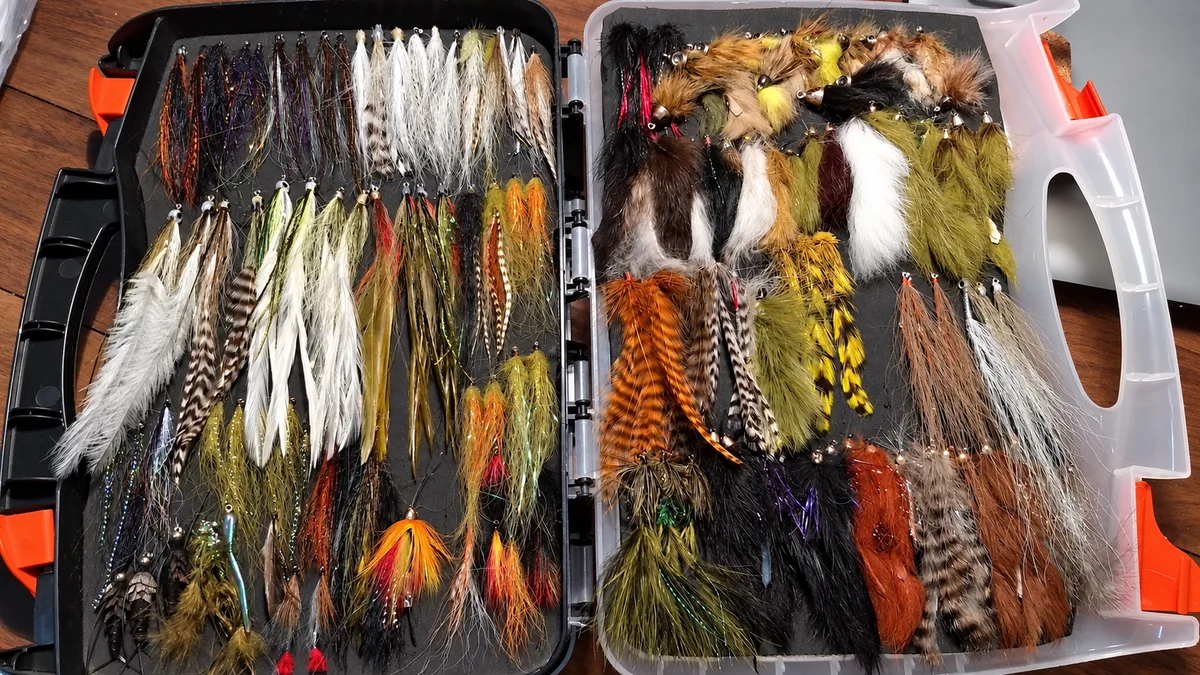
Streamer fishing adds an active way to explore a river from a boat. The fly's movement, depth and angle can all change as the boat and current move together. On guided Patagonia float trips, the guide helps you turn those changing conditions into manageable presentations. The objective is not to strip the line as quickly as possible. It is to understand where the fly is travelling and make deliberate adjustments that let you compare one approach with another.
Understand what the streamer is doing
Unlike a dry fly that you can often follow on the surface, a streamer may disappear soon after it enters the water. Its path depends on the setup, current and retrieve. Ask the guide what depth and movement are intended before you begin. This gives you a useful mental picture of the presentation rather than leaving you to retrieve line without knowing the purpose.
The broader note about dry flies, nymphs and streamers explains why methods differ. A streamer is commonly used to suggest a moving food item, but there is no single movement that works in every situation. A trout may follow without taking, and that observation can be more informative than assuming a quiet cast tells you nothing.
Coordinate the cast with the boat position
A moving boat changes the distance and angle to a bank continuously. Your guide may point out a target before you reach it so there is time to prepare. Keep a manageable amount of line ready and listen to instructions about which side to fish. Repeatedly casting behind the useful position can make the fly's path difficult to control.
When fishing with a companion, coordinate space before changing direction. Streamer setups can be awkward to cast, particularly when wind or additional weight is involved. Do not force the movement if it feels uncomfortable. Ask the guide to simplify the presentation or adjust the equipment. A useful cast is one you can control within the actual space available.
Change one part of the retrieve at a time
Try to notice the difference between a steady retrieve, shorter movements and a pause when the guide suggests one. If every cast uses a different speed, angle and depth, it becomes difficult to understand a fish's response. Repeating a manageable presentation while changing one feature creates a clearer comparison and gives the guide useful feedback.
Tell the guide if you see a following fish, feel contact or lose control of the loose line. Those details help shape the next cast. Ask what to do if a fish takes, because the appropriate response should be explained with the actual setup in hand. Rehearsing that instruction calmly is more useful than discussing it for the first time during an unexpected take.
Keep line management part of the technique
As line is retrieved, it needs somewhere to sit without catching on clothing, bags or equipment. Check the space around your feet and the area indicated by the guide. If a tangle starts, solve it rather than adding more loose line. A well-chosen fly cannot compensate for line that repeatedly stops feeding when you need to cast or respond.
The connection near the fly also deserves attention after snags or abrasion. Our leader and tippet note explains why checking the final section is part of fishing. Let the guide manage or explain any adjustment, especially when changing fly size or method. The full setup should work together rather than relying on the streamer alone to solve every difficulty.
Fit streamer fishing into the whole river day
A Limay River drift-boat trip can provide opportunities to discuss these decisions while working different water. Other destinations may also suit the method when conditions are appropriate. There is no promise that the largest fly produces the largest trout, or that an active retrieve is always the best option for the day.
If streamers are a particular interest, tell Southern Rivers Patagonia when planning your guided trip and describe the tackle you enjoy using. Stay open to other presentations if the guide sees a better opportunity. A productive learning experience leaves you with a clearer understanding of angles, movement and line control, as well as memories of the water you explored.