NOTES Watching the water
Sight Fishing for Trout in Patagonia: Clear-Water Guide
Seeing a trout is an invitation to slow down and understand its position.
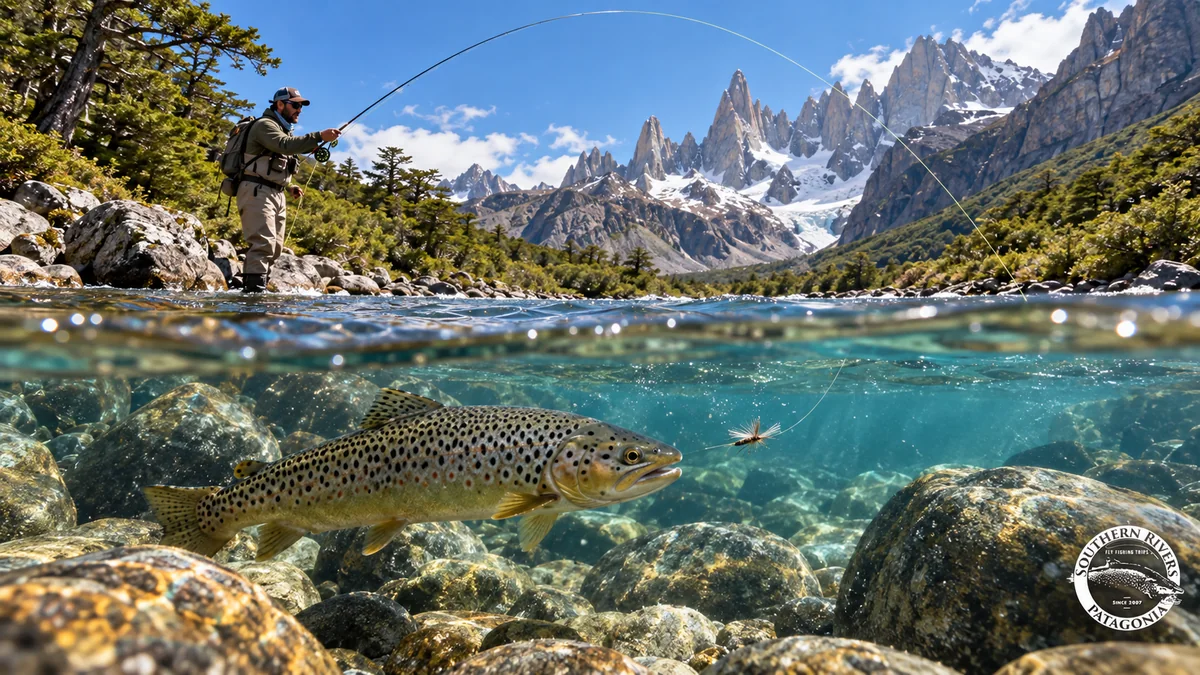
Clear water can make a fishing day feel like an exercise in observation. A shape beside a rock, a brief movement or a fish changing position may reveal a trout before you cast. On a guided Patagonia fishing trip, sight fishing means using those observations to plan the presentation. It does not mean every fish will be visible or willing to take a fly. The first challenge is noticing what is there without rushing into the water you hope to fish.
Look for movement as well as a complete fish
A trout can be difficult to separate from stones, shadows and reflections. Instead of expecting a perfect outline, watch a small area long enough to notice movement or a change against the background. Your guide may use a rock or another fixed feature to help you locate the same point. Saying only that the fish is over there usually leaves too much uncertainty.
Polarised sunglasses can reduce surface glare, but light direction, ripples and your viewing position still affect what you see. Do not assume that a clear river is equally easy to read from every angle. Ask the guide to describe a useful viewing position while respecting access and the limits of suitable footing or boat placement.
Observe the trout's position before choosing a fly
A fish holding near the bottom, moving across a pool or rising in a feeding lane presents different questions. Watch what it does instead of deciding on a technique solely because the water is transparent. The guide can help connect its position with the current and consider whether a presentation is practical from where you are.
The note about rising trout and dry flies explores visible surface feeding. A trout seen underwater may call for another approach, and sometimes waiting is the useful choice. Observation should improve the plan rather than become an obligation to cast at every fish you can identify. A visible trout is information, not a guaranteed opportunity.
Keep the approach part of the presentation
Before moving closer, talk with the guide about where to stand or how the boat should approach. A careless movement can change the situation before the first cast. Remaining patient also gives you time to organise loose line and choose the direction of the presentation without making unnecessary movements over the target area.
In some places, the best viewing point is not the best casting point. You may need to trade a perfect view for a workable angle. Our boat-versus-wading note explains why the appropriate position depends on the water and the plan. Entering a river simply because the fish looks close is not a substitute for evaluating the conditions with your guide.
Decide where the fly should arrive
Aim to place the fly where it can travel into the intended area, rather than trying to drop it onto the fish itself. Current and the behaviour you observed help determine that point. Ask the guide to describe the full path: where the fly lands, how it moves and where your attention should be during the presentation.
A short, accurate cast can offer better control than a longer one with excess line across different currents. The casting accuracy guide develops that idea. If the first presentation is not useful, identify why before repeating it. An adjustment in angle or line management may matter more than switching immediately to another pattern.
Learn from the response without forcing the encounter
A trout may move towards the fly, ignore it or leave the area. Describe what you saw to the guide and compare observations. A refusal can teach you something about position or presentation, but one response does not explain everything about the fish. Avoid turning each unsuccessful cast into a reason for louder movement and a faster succession of attempts.
Tell Southern Rivers Patagonia if watching fish and learning to observe clear water interests you when discussing guided day trips. Visibility depends on the destination and conditions, so the plan needs flexibility. A worthwhile sight-fishing experience leaves you better at recognising clues, communicating a fish's position and choosing a controlled approach, whether or not the encounter ends in a capture.