NOTES Overnight expeditions
Supported Fly Fishing Camps in Patagonia: Behind the Trip
The river journey continues while a separate team prepares the next place to stay.
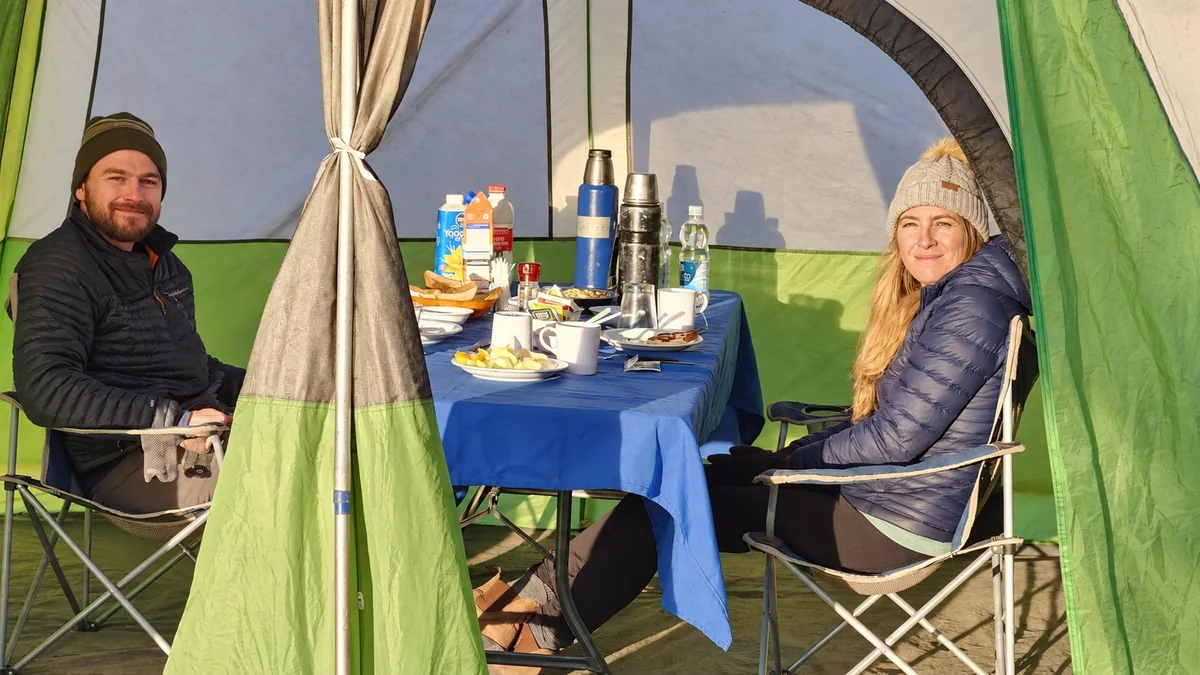
A supported fishing expedition involves two connected journeys. One follows the river with anglers and guides; the other moves the equipment that will make the next camp possible. Southern Rivers Patagonia's overnight float and camp trips bring those parts together so that your fishing day and your evening beside the water form one programme. Understanding the work behind the camp helps explain why an expedition needs more planning than simply adding a tent to a day trip.
Separate the fishing boat from the camp operation
While anglers fish downstream, a cargo boat and support crew carry camping equipment and work towards the next site. The guide with your fishing boat remains focused on the river and the presentations you are making. The camp team has a different task: preparing the place where the group will stop, eat and spend the night.
These roles depend on coordination. Decisions about the route and timing affect both teams, so an expedition cannot always change direction as casually as an independent day trip. Our introduction to overnight fishing trips describes the wider experience. A supported programme still takes place on a real river, where weather, access and suitable sites influence the organisation.
Understand what arriving at a prepared camp means
The expedition description includes sleeping tents and bedding, dining and kitchen areas, and other camp facilities arranged by the team. That support allows you to finish fishing and settle into an established place for the evening. It is a different experience from carrying and assembling all camping equipment yourself after a long day on the water.
Ask what is included in the specific itinerary and how personal belongings will be handled. A prepared camp is not a fixed lodge with identical surroundings each night. Sites and the practical layout respond to the journey. Knowing that difference helps you appreciate the comfort of the support without expecting every detail to resemble a hotel room.
Keep essential items with the fishing day
Some luggage travels with the camp operation and may not be immediately available while you are fishing. Separate the items you need during the day from the clothing and belongings intended for the evening. Ask the guide where each bag will travel so that a waterproof layer, sunglasses or another essential does not reach camp hours before you need it.
The note about packing a dry bag for an overnight float explains this practical division. Label your belongings clearly and keep the amount manageable. An organised bag is easier for you to use and easier for the team to move without repeatedly opening it to find a small item that should have been kept close to hand.
Plan meals and personal requirements in advance
Food is an important part of supported camp life, and the team needs information before the expedition leaves. Discuss dietary requirements when booking rather than waiting until the group reaches a remote camp. The same principle applies to practical accommodation needs or questions about the facilities described in your proposed programme.
The published expedition includes several comforts, but ask how they will work on your actual itinerary. If internet access matters for a specific obligation, discuss it beforehand rather than assuming a riverside connection will behave like your usual office. Camp logistics are best understood through clear expectations and a direct conversation about what is important to your trip.
Choose the expedition for its rhythm, not only its length
A Collón Cura multi-day fishing trip offers a way to follow the river over successive days, while other itineraries may have a different character. The attraction includes continuity: packing for the next stage, watching the landscape change and settling into a new camp. That rhythm is part of the holiday, not merely time between fishing sessions.
Tell Southern Rivers Patagonia how many days you have and how comfortable you feel with camp travel. You can also consider combining a lodge stay with an overnight float. Understanding the guides, cargo operation and camp crew makes the choice more concrete and helps you arrive ready to enjoy the shared work that supports the river journey.