NOTES Preparing for camp
Packing a Dry Bag for Overnight Fly Fishing in Patagonia
Organise your belongings around when you need them, not just where they fit.
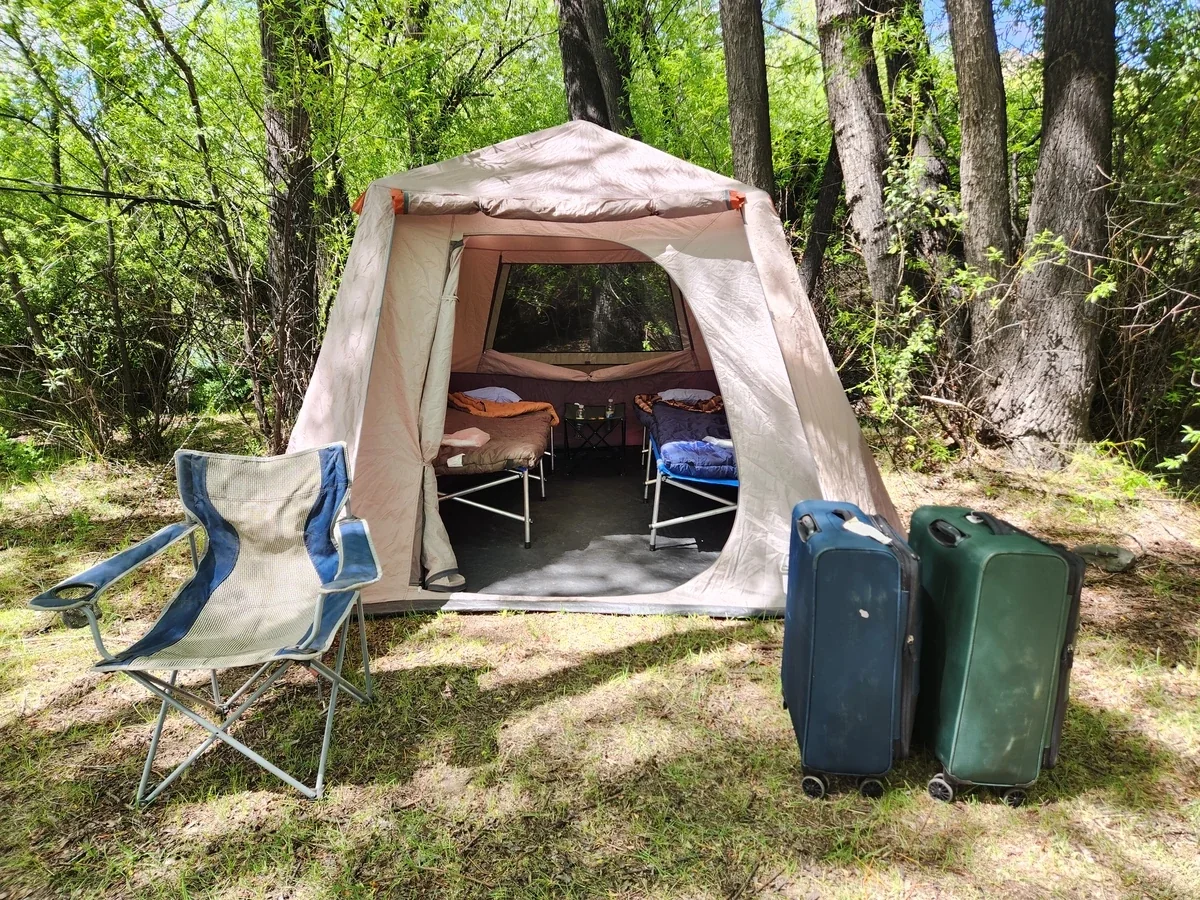
Packing for an overnight fly fishing trip in Patagonia is easier when you divide the journey into two parts: the hours on the river and the time at camp. The belongings needed for each part are not identical and may not travel in the same boat. Southern Rivers Patagonia provides a large dry bag for personal equipment on its supported expeditions. Confirm the details of your itinerary, then organise the contents so that useful items are available at the right moment.
Separate the fishing-day essentials from the camp bag
Ask which belongings will stay with you while fishing and which will move with the support operation. Keep the clothing and personal items you may need during the day in the arrangement agreed with the guide. A rain layer stored in the bag that travels ahead to camp may be dry, but it is not useful if the weather changes before you arrive.
Think through a normal sequence: leaving camp, fishing, stopping for lunch and reaching the next site. What would you want to reach during each stage? This is more practical than packing entirely by category. Our guide to supported fishing camps explains why the cargo and fishing boats have different roles and why access to the main bag can be limited during the river journey.
Build the camp bag around changing and resting
Pack the clothing you expect to use after fishing together, so that you can find it without emptying the entire bag. A separate place for dry socks and comfortable evening layers makes the transition to camp simpler. Keep personal toiletries contained and decide in advance which small items you need regularly rather than bringing an assortment without a clear purpose.
The expedition supplies camping equipment as described in the programme, so confirm those inclusions before transporting bulky duplicates. A sleeping system, tent and other camp facilities should be discussed as part of the reservation. The overnight-trip introduction gives context, while the actual booking details determine what you need to add to the provided arrangement.
Protect contents with sensible internal organisation
A dry bag works best when its closure and condition are appropriate to its design. Ask the team to demonstrate how the supplied bag should be closed instead of copying a method from a different type. Avoid overfilling it to the point where the closure becomes difficult. The amount you can fit inside is not the only consideration when preparing luggage for a river trip.
Organise smaller belongings inside the main bag so they remain easy to locate, and give items that could be damaged by water suitable additional protection. Do not treat the presence of a dry bag as a guarantee that every object can be stored carelessly. Label the bag clearly and keep straps or loose pieces arranged as the team requests for loading and transport.
Plan for wet clothing and small everyday needs
Ask how to handle damp items after fishing so they do not get mixed unnecessarily with clothing reserved for camp. Separating them makes the next morning easier to organise. Check your belongings at each transition and keep small essentials in consistent places. Repeating that simple routine reduces the chance of leaving something beside the tent while the support team prepares to move.
If you bring a phone or camera, discuss where it can be kept during the fishing day and how charging fits the expedition. Do not build an essential plan around an assumed power supply or connection without asking. The purpose is to understand your requirements before departure, when alternatives are easier to arrange than at a riverside camp.
Keep the overall luggage plan manageable
You may have a suitcase for the rest of your holiday as well as the expedition bag. Confirm where any luggage that is not going on the river will remain and how you will collect it afterwards. Those arrangements belong to the itinerary, especially when accommodation changes before or after the float. Our travel-equipment note covers the broader journey to Patagonia.
Send Southern Rivers Patagonia questions about clothing, personal requirements and baggage before your overnight fishing trip. A well-organised bag does not need to contain a solution to every imagined situation. It needs the right belongings, confirmed camping arrangements and a clear division between the items that stay close during fishing and those that wait for you at the next camp.